What Japanese People Actually Think When They See Your Kanji Tattoo
How Japanese people really react to kanji tattoos: gentle amusement at mistakes, genuine respect for research. An honest take from Tokyo-based native speakers.
You've been wondering what Japanese people will think when they see your kanji tattoo. Not the polished answer in travel forums, but the real one — the quiet pause, the expression they're trying to control, the thought running through their mind. That question deserves a direct, honest answer from someone who has been on the other side of that moment.
The short answer will probably surprise you: Japanese people are rarely offended. But what actually happens in those few seconds is more nuanced than most English-language content explains.
The Honest Truth: Japanese Reactions Aren't What You Think
The popular assumption is binary: either Japanese people are delighted by kanji tattoos, or they find them offensive. Neither extreme is accurate.
The more common reaction is something between gentle curiosity and quiet amusement, with the exact flavor depending on one factor above all others: whether the kanji is correct.
Based on thousands of verification requests reviewed by KIO's Tokyo-native team, the pattern is consistent. Japanese people who encounter a kanji tattoo on a non-Japanese person don't typically feel their culture is being invaded. They feel curious. They look closely. They read it. And then — in those three to five seconds before they respond — they're forming an opinion that has nothing to do with your ethnicity and everything to do with the care you took.
Age and location shape the reaction too. A twenty-four-year-old in Shibuya who has absorbed global pop culture her entire life responds differently than a sixty-year-old salaryman from a small city in Niigata. Tokyo is cosmopolitan and internationally-oriented; rural areas carry older associations. But even in conservative contexts, the reaction is rarely hostility. It's more often a measured reserve.
Why Japanese People Laugh at Kanji Tattoos (It's Not Mean)
The most documented category of kanji tattoo reaction in Japan involves humor — and it is worth understanding why this humor is not contemptuous.
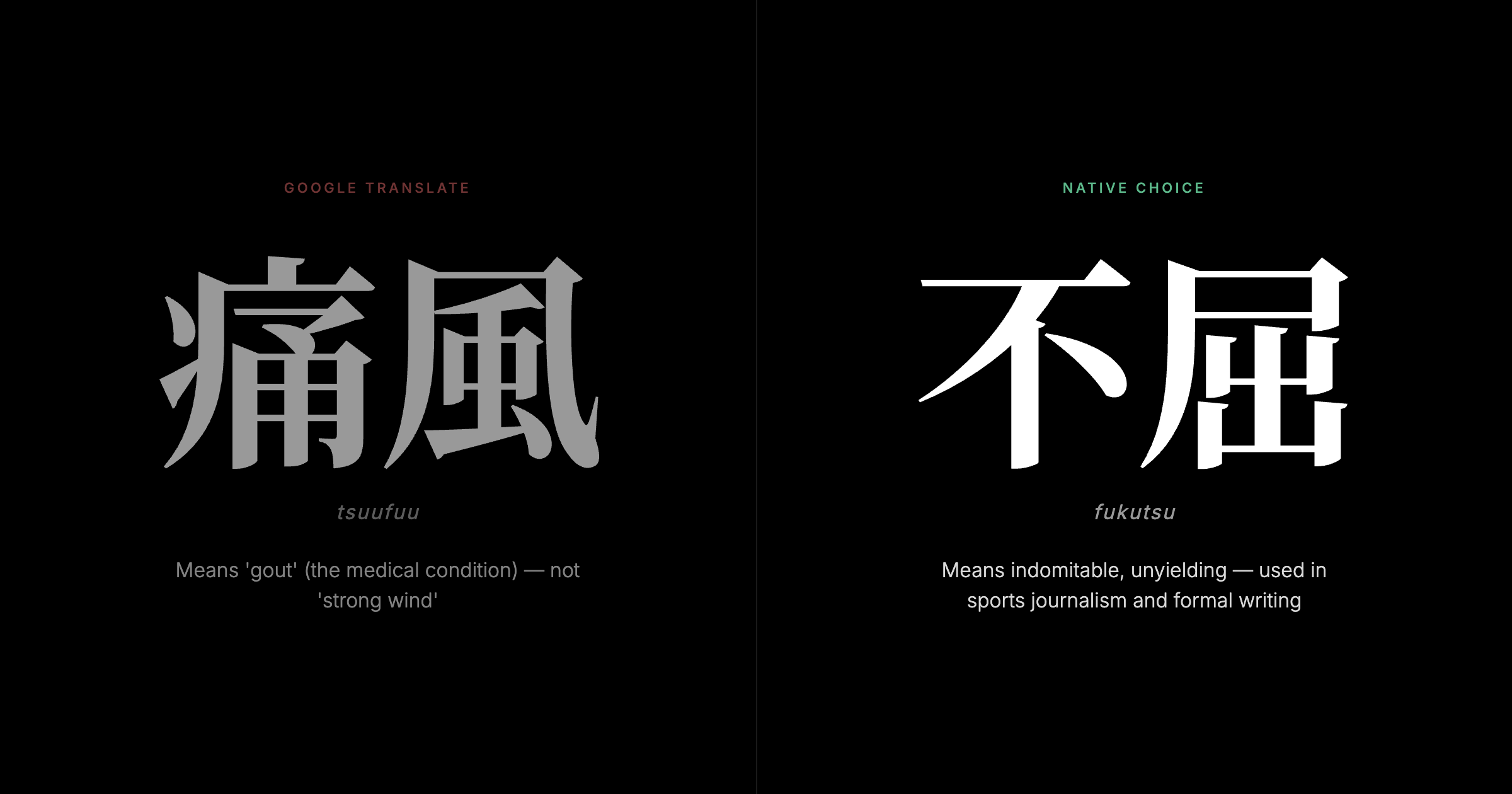
Consider the cases that circulate on Japanese social media: someone getting what they believed was a phrase about inner strength and receiving instead a permanent rendering of 冷蔵庫 (reizouko — "refrigerator"; a household appliance, not a philosophical concept). Or the well-publicized incident involving 七輪 (shichirin — a small charcoal grill used for barbecue; not the meaning the wearer intended). Or 痛風 (tsuufuu — gout, the joint disease caused by uric acid buildup; a word your doctor might use, not a tattoo artist).
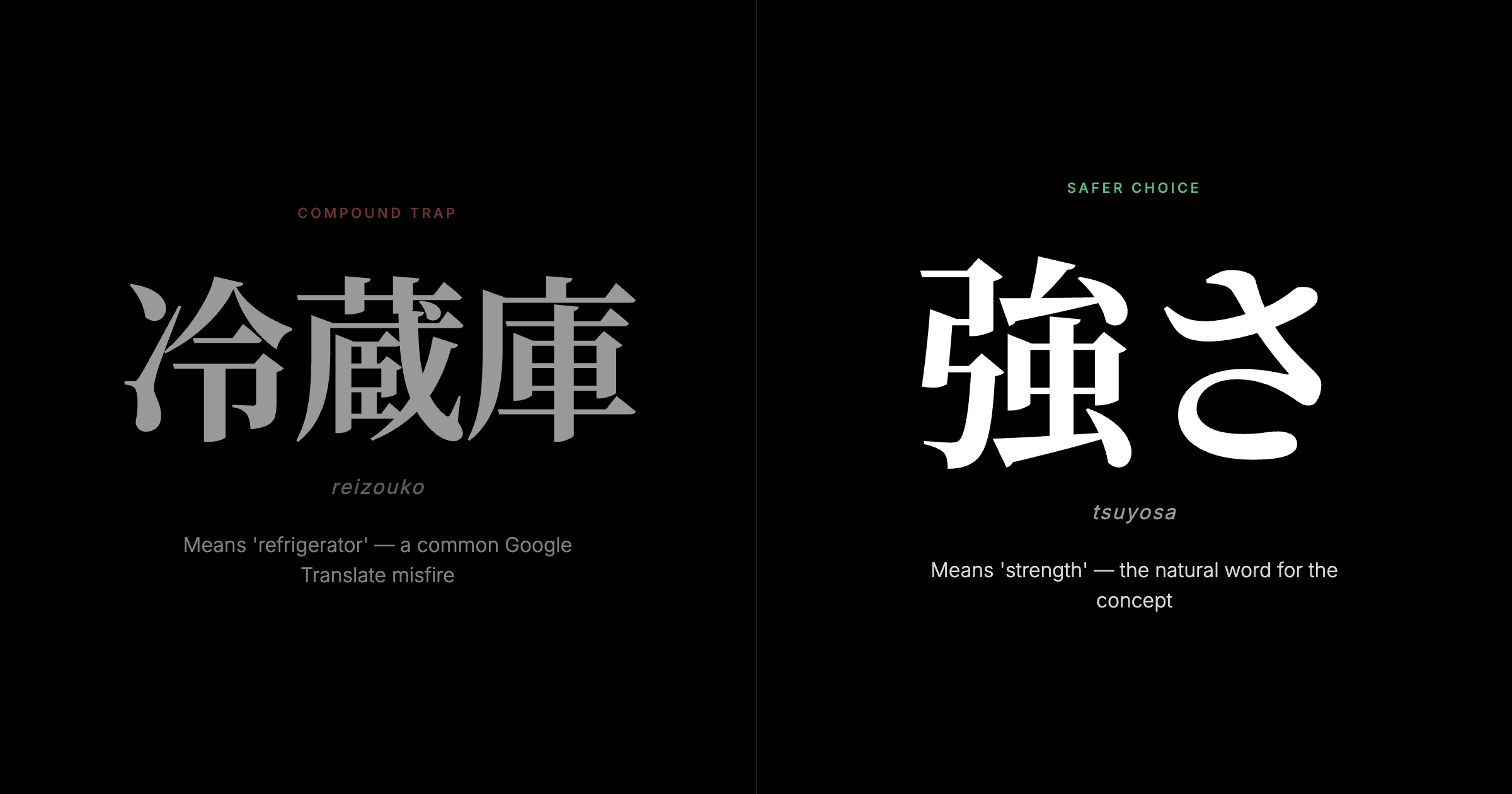
When these images spread online, the Japanese comments underneath are affectionate, not cruel: "This person tried. They just didn't try quite enough." Japanese internet culture has a long history of finding gentle humor in translation failures — including Japan's own "Engrish" exports, where Japanese-made products feature confidently misspelled English phrases. The laughter runs both ways, and nobody in Japan considers honest mistakes a cross-cultural offense.
The key distinction: Japanese people find honest mistakes amusing; they would find intentional mockery offensive. Getting 痛風 tattooed because Google Translate said it meant "strong wind" is an honest mistake — not the same as deliberately mocking Japanese script.
The Yakuza Shadow: Why Some Japanese Are Cautious
To understand why some Japanese people — particularly older generations — respond to tattoos with visible discomfort, you need historical context.
Traditional full-back irezumi (入れ墨 — irezumi — traditional Japanese tattooing; a centuries-old practice that became strongly associated with organized crime from the Meiji period onward) carries cultural weight that a small kanji on someone's wrist does not. This is why certain contexts — onsen, public pools, some gyms — still prohibit tattoos. It is not cultural gatekeeping directed at foreigners; it is a social accommodation of older Japanese sensibilities that connect visible tattoos with organized crime.
For small modern kanji tattoos, most Japanese people mentally file them in a separate category from irezumi entirely. Younger Japanese (roughly under thirty-five) have largely dropped the yakuza association for Western-style tattoos. If an older Japanese person seems briefly uncomfortable around your tattoo, the discomfort is likely about tattoos as a category — decades of social weight that has nothing to do with you personally.
Accuracy = Respect: What Makes a Kanji Tattoo Acceptable to Japanese People
The framework Japanese people apply when they see a kanji tattoo: did this person care enough to get it right?
A correctly rendered tattoo — accurate characters, natural usage, appropriate register — earns genuine respect. Not because you've passed some cultural membership test, but because you took their language seriously enough to research it properly.
Japanese culture places high value on effort and craft — the concept of 丁寧さ (teinei-sa — care, attentiveness, thoroughness; the quality of doing something properly rather than hastily) is embedded throughout social life. Selecting characters based purely on visual aesthetics, without understanding their meaning, is what Japanese people find slightly puzzling. Not offensive. Puzzling. It signals you didn't quite engage with what you were doing.
For a detailed guide on the verification process, see how to verify your kanji tattoo before getting it.
Regional and Generational Divides: Tokyo vs. Countryside, Young vs. Old
Japanese society is not monolithic, and neither are its reactions to kanji tattoos.
Tokyo and major urban centers have absorbed Western tattoo culture through fashion and media. Young people in Shibuya or Harajuku encounter kanji tattoos on foreigners regularly. The reaction leans toward curiosity — "What does yours mean?" is a genuine conversation opener.
Conservative rural areas operate on older social codes where any tattoo carries stronger stigma. A non-Japanese person with a kanji tattoo in a small rural town may encounter visible reserve from older residents — not hostility toward you personally, but a generational expression of values that have been slowly shifting nationwide.
The generational split is the most significant variable. Japanese people in their twenties and early thirties grew up in a Japan that exports its aesthetics globally. They view their cultural symbols being appreciated internationally as a sign of relevance, not violation. Japanese people over fifty, who came of age when the yakuza association with tattoos was at its social peak, carry more ambivalence — not confrontation, but occasionally a slight stiffness or a quick shift of gaze.
Your experience in Tokyo among younger Japanese will be markedly different from your experience in a small town in Tohoku. Neither represents the whole of Japan.
The Pre-Ink Psychology: What Actually Happens When You Show Someone Your Tattoo
You show your tattoo. There is a pause — typically three to five seconds — while the Japanese person reads the kanji, assesses whether it forms a natural word or phrase, and calibrates their response to the social situation.
This is assessment, not judgment. Japanese people aren't evaluating your worthiness. They're reading.
If the kanji is correct, the typical sequence is: a small smile, sometimes a verbal "ah," then genuine curiosity about what drew you to that character. "That's a good choice" is something Japanese people say when they're genuinely impressed someone researched well. Anime-inspired tattoos that demonstrate this kind of research — like choosing from the verified Demon Slayer kanji options, appreciating the authentic character names in Studio Ghibli, or understanding the register differences in One Piece kanji choices like nakama versus better alternatives, recognizing which Bleach kanji are real Japanese versus pure anime invention like 卍解 — often spark conversations about why the character matters, which is exactly the reaction that signals you took the language seriously. The ikigai kanji when chosen with cultural awareness earns this same respect, reflecting genuine engagement with meaning rather than wellness-trend adoption. And when a fan understands the Tokyo Revengers manji symbol and its cultural-geographic complexity, that depth of research — knowing not just what the symbol means but where it is safe to wear it — earns particular respect from Tokyo natives.
If the kanji is wrong, Japanese politeness culture kicks in. Japanese social norms place enormous value on not causing face-loss — roughly, the dignity a person maintains in public. A Japanese person who spots an error will almost never say "That's wrong." Instead: "Is that the meaning you were going for?" or "What does that mean to you?" These are gentle attempts to open a door without forcing you through it.
You can ask directly: "Does this kanji make sense?" Most Japanese people will be relieved by the directness and answer honestly. The politeness norm applies to volunteering criticism, not to giving it when asked.
This is part of why knowing if your kanji tattoo is wrong before you ever show it to a Japanese person is worth the effort.
Cultural Appropriation vs. Cultural Appreciation: The Native Verdict
Western discourse on cultural appropriation tends to be louder and more prescriptive than the actual Japanese conversation on the same subject.
The reality from a Tokyo perspective: most Japanese people do not frame kanji tattoos on non-Japanese people through the lens of cultural appropriation. The term — bunka no touyou (文化の盗用 — cultural appropriation; taking cultural elements from another group without acknowledgment or understanding) — exists in academic discourse, but it is not what ordinary Japanese people reach for when they see a foreigner with a kanji tattoo.
The framework they use is simpler: respect versus carelessness. A person who researched their kanji, consulted a native speaker, and understands what they chose is showing respect. A person who pointed at a font sheet and said "that one looks cool" is being careless — mildly eye-roll-worthy, but not a violation.
Kanji is a living writing system used by 125 million people daily, in contexts from government policy documents to candy wrappers. A foreigner honoring a concept important to them, approached with genuine care, is not a problem. It is, in many ways, a compliment.
For a deeper exploration, the cultural appropriation article covers the specific lines between appreciation and appropriation with more historical context.
Common Kanji Tattoo Mistakes (And Why Japanese Find Them Funny, Not Offensive)
The pattern in kanji tattoo errors is consistent: people use machine translation without checking whether the Japanese result is natural, correctly scoped, or even a real usage.
冷奴 (hiyayakko — chilled tofu; a summer side dish) is a word that would strike any Japanese reader as a baffling tattoo choice, yet it emerges from certain search paths around "cool" in translation tools. 味噌 (miso — miso paste; the fermented soybean paste used in cooking) can surface as a machine-translation output when Japanese concepts or ingredients are run through a tool without verifying the result. The problem is never the search term itself — it is the failure to check what came back.
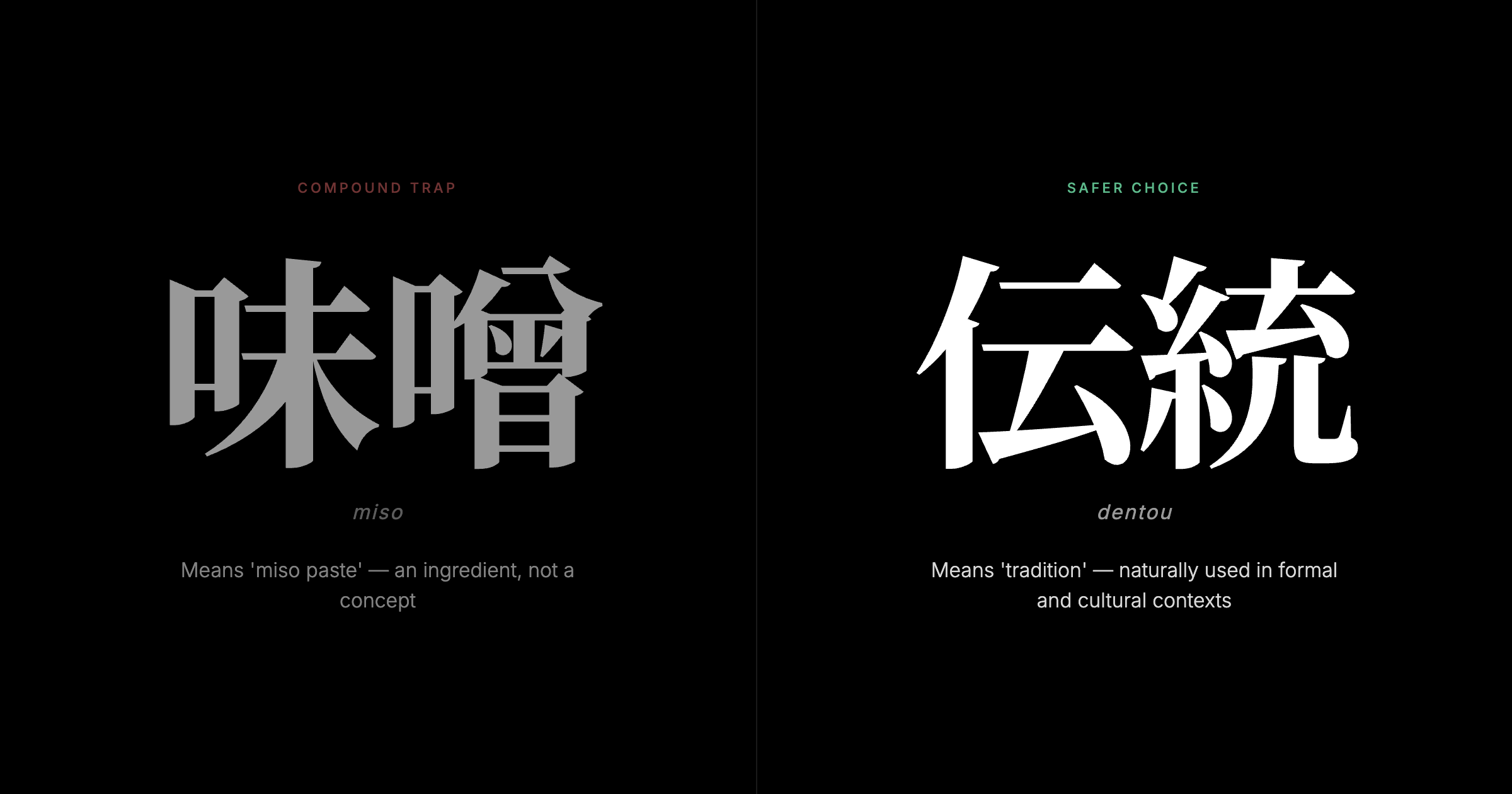
When Japanese social media users share these examples, the comments are warm and human. The recurring sentiment: "They clearly wanted something meaningful. They just ended up somewhere else." The humor is rooted in empathy for honest effort, not mockery of the person.
The process that lets people down most often is over-reliance on machine translation. The Google Translate kanji tattoo guide covers exactly why translation tools fail for tattoo decisions.
What Japanese People Actually Respect About Kanji Tattoos
Here is what specifically earns genuine admiration from Japanese viewers.
Evidence of research. You consulted more than one source and ran your design past a native speaker. This is visible in the result — correctly scoped kanji, natural phrasing, appropriate character selection.
Meaningful selection. The kanji connects to something real in your life. Japanese people ask "Why that kanji?" as a genuine question. A real answer — beyond "it looks cool" — changes the entire conversation.
Understanding the register. 勇気 (yuuki — courage; used in everyday speech, children's books, sports contexts) lands differently from 武勇 (buyuu — martial valor; an archaic term appearing in historical and formal military writing). Knowing which register fits your intention signals genuine engagement with the language. Choosing meaningful kanji for tattoos walks through the selection process in detail.
Long-term commitment. The tattoo as a door into the culture, not a souvenir extracted from it. Japanese people find it genuinely meaningful when someone gets a kanji tattoo and then engages more deeply with the culture — studying the language, exploring the literature, living out the values the kanji represents.
For concrete examples of single kanji that demonstrate this kind of care and cultural awareness, the guide to the best single kanji for tattoos walks through 10 verified choices with the native perspective built into every selection.
Native Verdict
From KIO's Tokyo-based review team:
The question "What will Japanese people think?" is almost always rooted in anxiety about judgment. That anxiety is understandable — and it misreads the actual dynamic.
When we see a kanji tattoo on a non-Japanese person, our first instinct is curiosity: what drew you to this? Does it say what you think it says? A correct, well-chosen kanji earns real respect from us — not the polite kind. It says: this person did their homework.
Most Japanese people aren't gatekeeping their own script. Kanji is used on train station signs and candy wrappers alike. It is not sacred in the sense that it cannot be touched. It is, however, a living system with specific meanings, registers, and connotations that deserve to be understood before being worn permanently.
Do your research. Consult a native. Choose something that genuinely connects to your life. The response you get from Japanese people will almost always be better than you expected — because you'll have earned it.
FAQ
Will Japanese people be offended by my kanji tattoo?
Rarely. The reaction is almost never offense — it is either gentle amusement (if something is wrong) or genuine respect (if the research shows). Offense would require intentional disrespect or mockery; honest mistakes don't cross that line. Modern Japanese people, especially younger generations in urban centers, view kanji tattoos as cultural appreciation. Your ethnicity matters far less than your accuracy.
What happens when you show a Japanese person your kanji tattoo?
Expect a three-to-five second pause while they read and assess. Correct kanji: curiosity, often a smile, maybe a question about why you chose that character. Incorrect kanji: genuine concern, but delivered indirectly — Japanese politeness means they won't say "that's wrong" outright. They'll ask "Is that really what you meant?" as a soft hint. The overall tone is almost never hostile.
How do I know if my kanji tattoo will be acceptable to Japanese people?
Three signals earn respect: you consulted a native Japanese speaker or expert before committing, the kanji connects meaningfully to your life or values, and you can explain its meaning confidently. Japanese people aren't evaluating whether you deserve the tattoo — they're assessing whether you cared enough to get it right.
Is it cultural appropriation to get a kanji tattoo as a non-Japanese person?
From a Tokyo native perspective: no, not if you approach it with genuine research and respect. Most Japanese people don't use a cultural appropriation framework here — they think in terms of respect versus carelessness. Researching meaning, consulting natives, choosing something personally significant equals appreciation. Grabbing random characters because they look decorative is careless, but thoughtless rather than offensive.
Do Japanese people think Western kanji tattoos are cool or silly?
It depends on execution. A well-researched, correctly-rendered tattoo? Genuinely cool to most Japanese under thirty-five — evidence their culture resonates globally. Wrong meaning or sloppy execution? Silly, but in an affectionate way. Older generations carry more ambivalence rooted in historical yakuza associations with tattoos.
What kanji should I absolutely avoid?
Avoid characters you can't explain the meaning of — "it looks cool" is legible to Japanese viewers and doesn't land well. Avoid compound words selected from a translation app without native verification, since compounds often mean something entirely different from their component characters. The safest approach: choose kanji that genuinely connects to your life, verify it with a native speaker, and be able to articulate why you chose it.
Ready to make sure your kanji is exactly what you intend it to be? Verify your kanji at Kanji Ink Oracle — Tokyo-based reviewers return an assessment within 24 hours, covering meaning, register, and natural usage, so you walk into your tattoo appointment with confidence rather than uncertainty.